Congratulations on starting your Invisalign journey! It’s an exciting step toward achieving the beautiful, straight smile you’ve always wanted. As you get used to wearing your aligners, you’ll quickly realize that a key part of the process is keeping them clean. After all, the magic of this treatment is that the aligners are virtually invisible, and you want to keep them that way. If you are starting your treatment with Invisalign in Toronto, one of the first questions you’ll have is about the best Invisalign cleaning methods.
At Smile Dental on St. Clair, we believe that great results come from great habits. Keeping your aligners fresh, clear, and hygienic is simple, but it’s crucial for both the aesthetics of your treatment and your overall oral health. This guide will walk you through the most effective Invisalign cleaning methods to ensure your experience is a success from start to finish.
The Importance of Proper Invisalign Cleaning Methods
Before we get into the “how,” let’s talk about the “why.” Diligently cleaning your aligners isn’t just about appearances; it’s essential for your health.
- To Prevent Bacteria Buildup: Your aligners sit snugly against your teeth for 20-22 hours a day. If they aren’t clean, they can trap plaque and bacteria against your enamel, which can increase your risk of cavities and bad breath.
- To Keep Aligners Invisible: The whole point of Invisalign is its discreet appearance. If your aligners become cloudy, stained, or yellowed from improper care, they lose their clear, nearly invisible quality.
- To Avoid Odours: Saliva and plaque can lead to unpleasant odours if the aligners aren’t cleaned regularly. Fresh aligners mean a fresh-feeling mouth.
Consistent use of proper Invisalign cleaning methods is what protects both your teeth and your investment.
Recommended Invisalign Cleaning Methods: Your Daily Routine
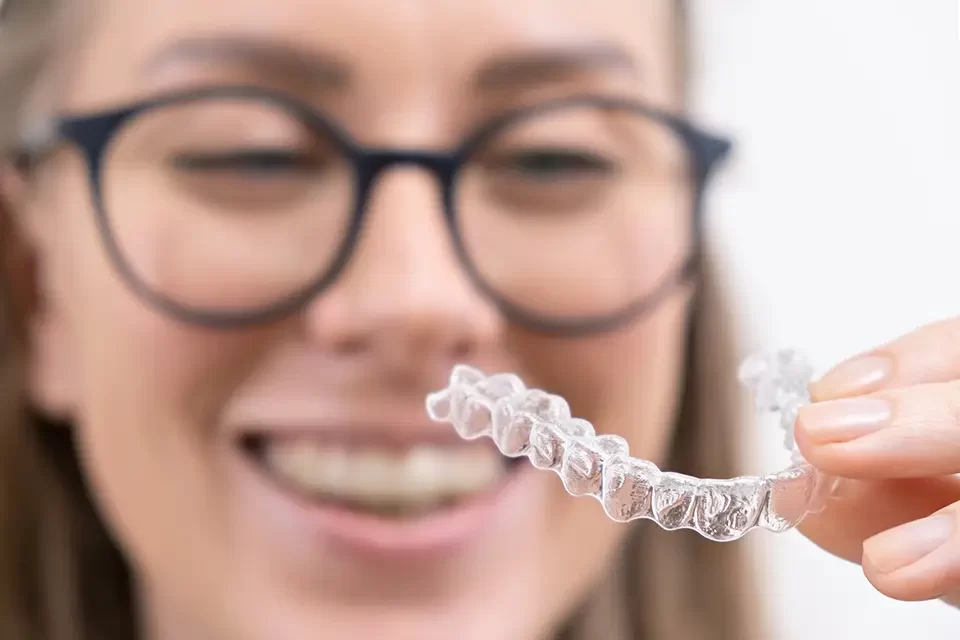
The foundation of keeping your aligners pristine is your daily routine. These simple steps should be performed every time you remove your aligners.
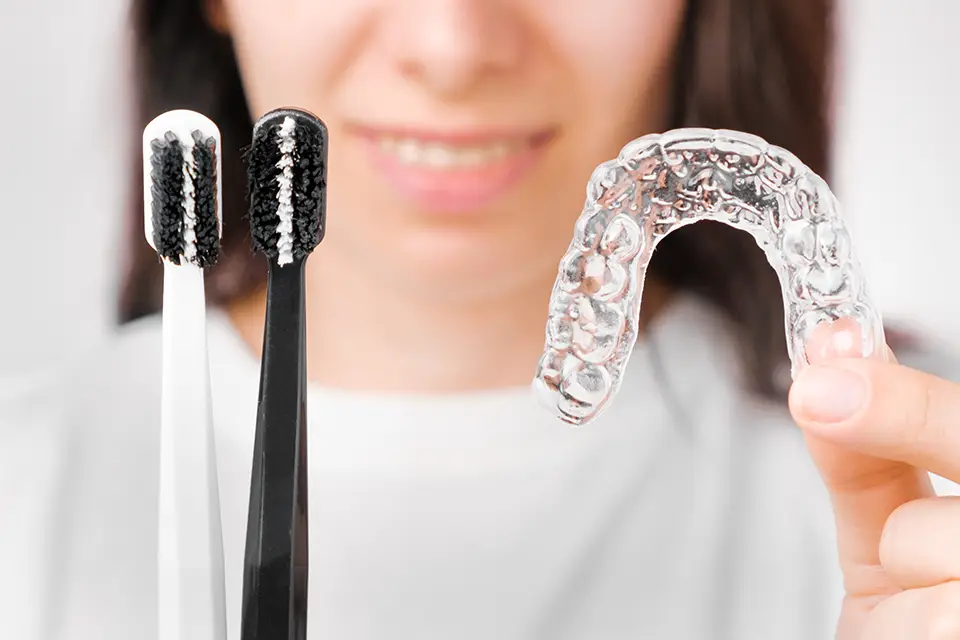
- The Brush and Rinse Method: This is your go-to, everyday practice. The moment you take your aligners out to eat or drink, rinse them immediately. This prevents saliva and plaque from drying on the surface. Before you put them back in, gently brush them inside and out with a separate, soft-bristled toothbrush and cool or lukewarm water.
- Using Clear, Unscented Soap: For a slightly deeper daily clean, you can use a small amount of clear, unscented antibacterial soap with your soft toothbrush. This helps to remove any film or residue more effectively than water alone. Just be sure to rinse the aligners thoroughly before placing them back in your mouth.
Advanced Invisalign Cleaning Methods for a Deeper Clean
In addition to your daily routine, it’s a good idea to perform a deeper soak a few times a week, or whenever your aligners need a refresh. These are some of the most effective advanced Invisalign cleaning methods.
- Invisalign Cleaning Crystals: This is the official cleaning solution recommended by the manufacturer. You simply dissolve a packet of the crystals in water and soak your aligners for about 15 minutes. This effectively removes plaque and keeps them sanitized and crystal clear.
- Denture or Retainer Cleaning Tablets: A great and widely available alternative is to use effervescent cleaning tablets designed for retainers or dentures (like Efferdent or Polident). Soaking your aligners in this solution for the time recommended on the package is an excellent way to kill bacteria and lift stubborn film.
Invisalign Cleaning Methods to Avoid at All Costs
Knowing what not to do is just as important as knowing what to do. Using the wrong products can permanently damage your aligners. Avoid these common mistakes:
- Never Use Hot Water: Hot water can warp and distort the aligner’s patented SmartTrack® material. This can change the precise fit of the aligner, which could negatively impact your treatment progress. Always use cool or lukewarm water.
- Avoid Toothpaste: Most toothpastes are abrasive. Brushing your aligners with toothpaste will create microscopic scratches on the surface, making them appear dull and cloudy. These scratches also become magnets for bacteria.
- Do Not Use Colored or Scented Soaps: The dyes and perfumes in these soaps can stain the aligners and leave an unpleasant taste behind.
- Avoid Harsh Mouthwash: Soaking your aligners in colored mouthwash (especially those containing alcohol) can dry out the plastic and stain them.
Conclusion: Making Your Cleaning Routine Effortless
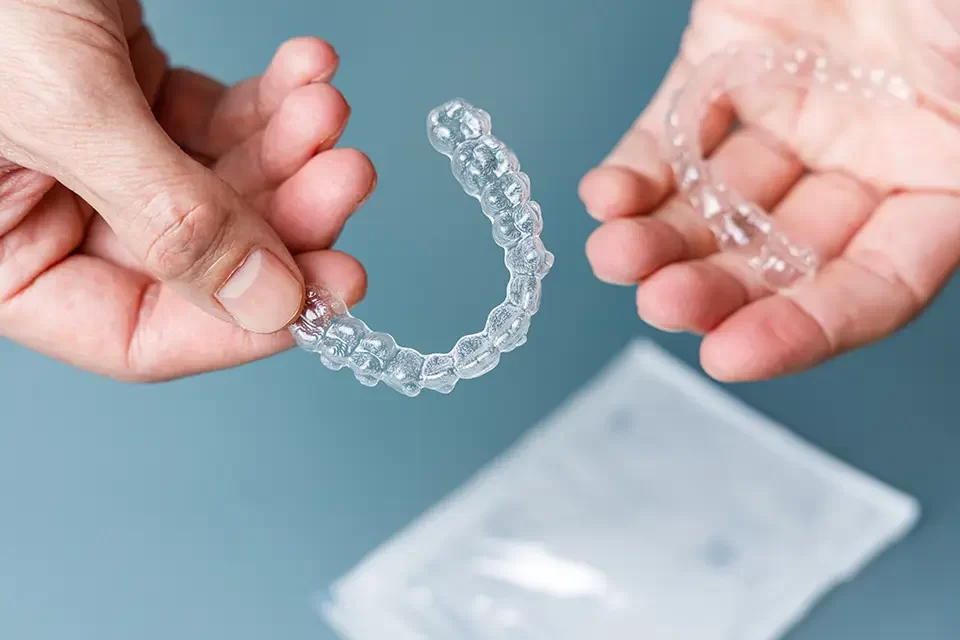
The key to success with any of these Invisalign cleaning methods is consistency. By making it a habit to rinse your aligners every time you take them out and giving them a gentle brush before you put them back in, you can easily keep them fresh and invisible. A little care goes a long way in ensuring your journey to a straighter smile is a comfortable and hygienic one.
Our team at Smile Dental in St. Clair, Toronto, is here to support you through every step of your treatment. If you ever have questions about your care, we are always here to help.
Frequently Asked Questions (FAQs)
1. How often should I be cleaning my Invisalign aligners?
You should rinse your aligners every time you remove them and give them a gentle brush before each re-insertion. We recommend a deeper soak using one of the approved Invisalign cleaning methods, like cleaning crystals, at least once a day or every other day.
2. What should I do if my aligners start to smell bad?
An odour is a sign of bacterial buildup. It’s a good time for a deep clean with Invisalign Cleaning Crystals or a retainer cleaning tablet. Also, ensure you are brushing and flossing your own teeth thoroughly before putting your aligners back in.
3. Do I really need a separate toothbrush for my aligners?
Yes, it’s highly recommended. Using the same brush you use on your teeth can transfer toothpaste residue (which is abrasive) to your aligners. A dedicated, soft-bristle brush is the best tool for the job.