You’re ready to brighten your smile—now you’re weighing Zoom vs laser whitening Toronto and wondering what actually changes the result, the time in the chair, and the after-effects. At Smile Dental in St. Clair, Toronto, we keep comparisons simple: how each method works, who it suits, and what to expect day by day after treatment. In this guide, you’ll see Zoom vs laser whitening Toronto explained in plain language with clear pros/cons, sensitivity tips, and a realistic look at shade changes. And if you’ve searched teeth whitening Toronto and found only marketing hype, this is the calm, practical version—numbers, timelines, and comfort strategies you can use.
How In-Office Whitening Works (The Essentials)
Professional whitening lightens internal tooth pigments using a measured peroxide gel, careful isolation to protect gums and lips, and timed activations. The science is straightforward: pigment molecules break into smaller, less-visible fragments. Technique—not just chemistry—drives consistency. This is why clinics that photograph baseline shade, isolate thoroughly, and limit exposure time see predictable outcomes—no “white in the centre, dull at the edges.”
Zoom vs Laser Whitening Toronto: What's Technically Different?
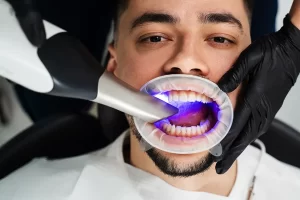
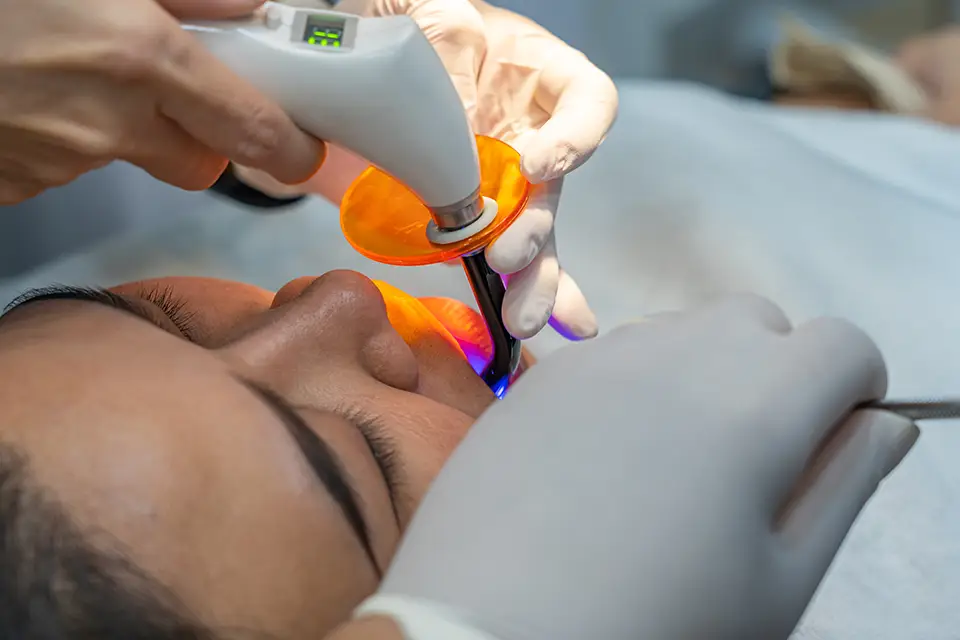
Both approaches use a professional gel plus a light source, but they emphasize different triggers.
- Zoom (LED activation):
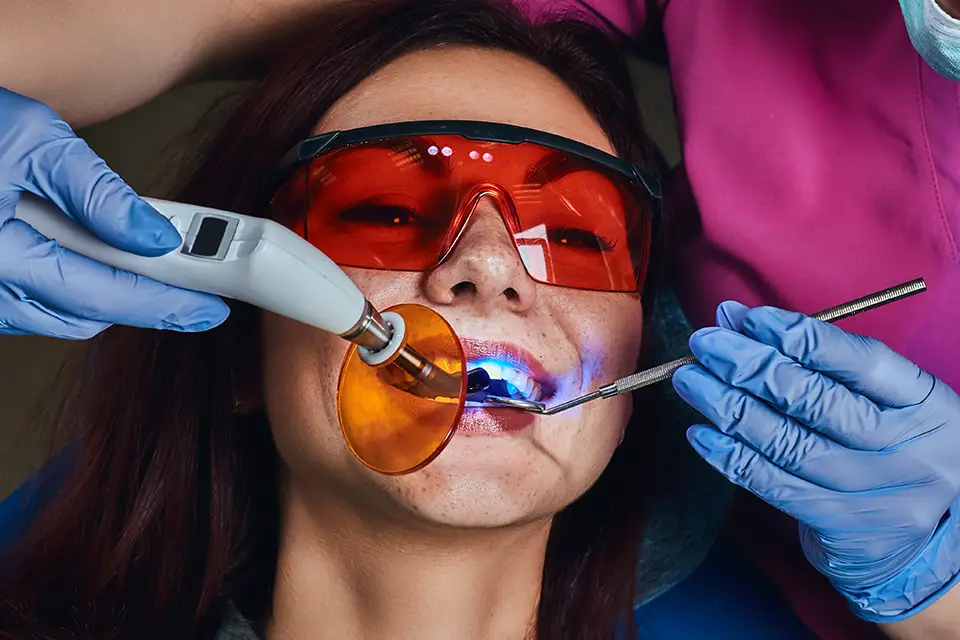
- Uses a broad-spectrum LED lamp to activate the whitening gel in short, controlled cycles. Power comes from gel formulation + time under the LED.
- Laser Whitening (narrow beam):
- Uses a targeted laser wavelength to energize specific photo-initiators in the gel. Power comes from precise light-gel pairing + shorter contact on each area.
In short, Zoom vs laser whitening Toronto is less a battle and more a toolkit: both can lift shade effectively when isolation, exposure time, and post-care are dialled in.
Who Benefits from Each Approach
If you have even colouring and prefer a steady, session-based lift, Zoom is often a great fit. If your enamel is thinner, you’re prone to sensitivity, or you have tricky local stains, a laser protocol with shorter, targeted passes may feel gentler. For deep grey-tone staining, either method may need a hybrid plan (in-office start + custom trays at home) for the last few shades.
Also Read: Zoom Teeth Whitening Toronto: A Clear, Comfortable Path to a Brighter Smile
Zoom vs Laser Whitening Toronto: Side-by-Side Pros and Watch-Fors
A quick, honest comparison helps you choose confidently.
- Zoom (LED) Pros:
- Efficient whole-arch treatment in one sitting.
- Predictable cycles (often 15-minute rounds) with easy pausing if sensitivity rises.
- Pairs well with same-day impressions for maintenance trays.
- Zoom (LED) Considerations:
- May produce “zings” in patients with exposed root surfaces—manageable but worth planning for.
- Requires meticulous isolation to avoid gum irritation (we handle this).
- Laser Pros:
- Highly targeted energy—useful when certain teeth or areas are stubborn.
- Shorter local exposures can feel gentler for sensitivity-prone patients.
- Good for touch-ups on selective teeth (e.g., canines).
- Laser Considerations:
- More operator-dependent; success hinges on precise passes and gel pairing.
- May require slightly more chair choreography when multiple areas need individual attention.
Framed this way, Zoom vs laser whitening Toronto becomes a question of enamel profile, sensitivity history, and how quickly you want to reach a specific shade.
What Results Look Like—and How Long They Last
Most patients notice a clear lift immediately, with shade stabilizing after 48 hours as teeth rehydrate. Longevity depends on your habits: deep-pigment drinks (coffee, tea, red wine), smoking, and abrasive toothpaste shorten the “bright window.” With modest maintenance (custom trays 1–2 nights every few months), results commonly hold 12–18 months. We set realistic goals, so whitened enamel still looks natural in daylight—not bluish or chalky.
Zoom vs Laser Whitening Toronto: The Appointment Flow
Whether you choose Zoom or laser, your visit follows a calm, structured sequence:
- Baseline & Photos: Shade mapping under consistent lighting—so progress is visible and honest.
- Isolation: Lip/cheek retractors and gum barriers to protect soft tissues.
- Measured Application: Timed gel placement; LED or laser activation per protocol.
- Cycle Checks: Reassess comfort; adjust exposure or pause if sensitivity rises.
- Finish & Seal: Desensitizing gel or varnish; post-care briefing and maintenance options.
A clear routine keeps Zoom vs laser whitening Toronto predictable and comfort-focused.
Sensitivity Management That Actually Works
Mild “zings” can happen with either method. We cut them down by pre-treating with potassium nitrate and fluoride, trimming contact time on thinner enamel, and finishing with a desensitizer. At home, use a low-abrasion toothpaste, lukewarm drinks for 24–48 hours, and a soft brush at a 45° angle to avoid roughening the surface. Good news: most sensitivity fades quickly when these steps are followed.
Costs, Timelines, and What Affects Them (They Vary by Factors)
Fees reflect three things: chair time, gel systems, and whether we include custom trays for maintenance. One in-office visit typically runs 60–90 minutes, whether Zoom or laser is used. If you have uneven staining or a high-stain lifestyle, we may suggest a hybrid plan (single in-office session + trays). It’s often the best value because the big lift happens once, then low-cost refills keep brightness steady—no need to repeat full chair time every season.
Lifestyle Habits That Stretch Your Results
A few small tweaks extend your “bright window” regardless of choice:
- 48-Hour “White Diet”: Lighter foods and clear beverages reduce restaining while enamel rehydrates.
- Rinse, Don’t Scrub: After coffee or tea, water rinse first; brush gently later.
- Straws for Dark Drinks: Less contact, fewer edge stains.
- Tray Touch-Ups: One or two nights every few months keeps the shade even.
- Regular Cleanings: Polished enamel stains more slowly and lifts more uniformly next time.
With these, Zoom vs laser whitening Toronto is less about “which lasts longer” and more about “which routine you’ll follow.”
Local Advantage at Smile Dental, St. Clair
We tailor protocols after examining enamel thickness, recession, and stain patterns; we also build a maintenance plan that fits your schedule and coffee habits. Photos document change honestly, and you leave with two or three practical habits (not a long rulebook). Whether you choose Zoom or laser, the aim is the same: a believable, camera-ready shade that still looks like you.
Conclusion
Both systems can deliver a bright, natural result when the plan fits the person. Think of Zoom vs laser whitening Toronto as two routes to the same destination: predictable shade lift, managed sensitivity, and a maintenance rhythm you’ll keep. If you’re ready to compare options with your enamel and lifestyle in mind, book a consult at Smile Dental in St. Clair, Toronto. We’ll map your baseline, show a realistic shade range, and recommend the smallest, smartest plan to keep your smile bright all year.
FAQs — Zoom vs Laser Whitening Toronto
Which is faster—Zoom or laser?
Chair time is similar overall, but the laser can feel faster for targeted areas because we work in precise passes. Zoom treats the full arch in steady cycles. In practice, Zoom vs laser whitening Toronto speed differences are minor; comfort and enamel profile matter more.
Also Read: Clear Signs You Need to See a Dentist Immediately (And What to Do Next)
Which gives a bigger shade jump?
Both can lift several shades in one visit. Results depend on starting colour, enamel thickness, and strict isolation more than the brand name. We set expectations with baseline photos so zoom vs laser whitening Toronto outcomes are measured, not guessed.
Will I be sensitive afterward?
Possibly for 24–48 hours. We pre-treat and finish with desensitizers, then send simple home instructions. If you’ve had sensitivity before, we can shorten exposures or choose the approach that’s gentler for your enamel.
Can I whiten if I have bonding or veneers?
Whitening gels don’t change composite or porcelain. We typically whiten first, then refresh visible bonding to match. We’ll plan around this, so your final shade looks seamless, whichever path in Zoom vs laser whitening Toronto you choose.